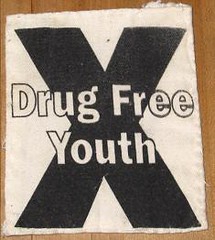
DRUG TESTING???

The one thing that people always value more than anything else is privacy. We all want a world with just us in the center kind of like a world of our own. So it’s not a big surprise that a heated debate would ensue over the topic regarding drug tests prior to school admissions. It’s a very delicate matter, one that requires careful treading. A drug test, for students, is a very stingy subject. Basically, it boils down to two things; both ironically have “rights” in them: the student’s rights and the school’s rights.

Schools nowadays agree that a drug tests is not just a fancy gimmick to catch attention but merely an action to ensure the safety of its students. With today’s teens going liberal in the way they think and act, it’s impossible to overlook the possibility that illegal drugs might be the one pulling all the strings resulting to the currently rampant display of misdemeanor. They intend to sort out all possible students to prevent future incidents from happening.

On the other end, students disagree to what they call the newfound way to invading privacy and manipulating student admissions. Through this, the school can carefully monitor all students coming in, screen all those that would serve to their best interest. This is just one of the ways they can use it. And what’s to stop them from using all sorts of criteria just so they can cast out unfavorable students?

This issue has been going on for a while now and it’s time to make a stand. Though the intentions are indeed good, drug test is a proposal that cannot be rushed. Both parties must reach a consensus first. It should be conducted with the help of the local government without making exceptions. And most of all, the welfare of the students must be the priority. After all, they are the future of this generation.

Why smoke? Why drink?


Wherever you go, it seems that smokers and drinkers are there to shed light to your life and give you a reason not to be addicted to those substances. You see them smoking and drinking their way to life as if they don’t give a care for the world as long as they have booze and a couple of cigarettes in their pocket. They have become a staple installment in street corners and the like that you would be a fool not to think that they actually live there.


So what makes smoking and alcoholism so prevalent? Even kids these days are so into it that some of them are acutely addicted before they can even reach their puberty?


Addiction in all its forms has existed since the dawn of man. Whether it be in one form or another, substance addiction or whatever it is, you can’t say that you’re not addicted to something OR someone. It robs you of your time and innocence. Minor forms of addiction are alright as long as you can keep yourself in check once in a while. But if it takes over your whole life then it doesn’t take a professional that something is seriously wrong. Sustaining someone’s addiction requires money and in a man’s point of view, money doesn’t knock on your door for your own reasons.


This axiom perhaps is the main reason why the most prolific form of addiction in the country is smoking and alcoholism. They’re cheap, readily available and are not illegal. You won’t be hiding in some corner of your house cowering in fear of persecution from the authorities and the people. 


If you look at the big picture, all forms of addiction end up the same way, you drown in your own self corruption, like an inescapable pit. So why is it that the government won’t take the necessary precautions to at least minimize the damage done to its people? People are literally killing themselves and someone up top is reaping it big. Wait. So people are paying those corporate executives their own hard earned (or stolen) money so they could commit suicide? 


It’s laughable concept, but true nonetheless.
So in summation, the reason these widespread forms of addiction exist can be attributed to their availability, price, and lack of initiative from those with power. Heck, even today’s president admitted to indulging himself to smoking. But he said he’ll stop, in due time. In retrospect, isn’t that what every addict says?

Effects of Toxicity


I couldn't remember having my own personal encounter with toxicity. But I've heard a story about someone I know who has been using Narcotics to induce sleep. Narcotics are known to alleviate pain when used in moderation and also promotes a restful sleep. Taking it on a regular basis leads to addiction, which happened to the person I mentioned in the start of this story. Little did the person know that she was already addicted to the substance and one time, she took a dose which is more than what she usually takes and caused her to be confused/lack concentration on the next day that lead to a deep sleep. Concerned friends were alarmed that they called a friend who happened to be a medical student who fortunately resolved the problem.

Narcotics when used excessively may cause seizures and even tremors. Examples of which are Morphine and Heroin. Such drugs causes high risk of addiction and they cause Central Nervous System (CNS) depression. 

After that incident, the substance abuser started seeking for professional help to help her get rid of her unhealthy habit and from then on she learned a lot from her awful experience.

TESTS. . .


Measurement of progesterone and estrogen level is commonly made possible by Radio Immuno Assay (RIA) and Enzyme Linked Immunosorbent Assay (ELISA).


Progesterone Level Determination

Progesterone is very significant in every woman throughout their menstrual cycle. Measurements of progesterone are primarily done to determine whether a woman has already ovulated and also to monitor induced ovulation. During pregnancy, progesterone is measured along with hCG to help in the diagnosis of an ectopic or failing pregnancy. Ectopic pregnancy shows a decreased level in progesterone. In cases of high risk pregnancy, progesterone is oftenly measured. It may also help in assessing the fetal health.

Serum progesterone

From the name itself, it is the measurement of progesterone in the blood. 
The progesterone test is a simple blood test that is commonly performed in most fertility clinics. A large number of women undergoing fertility treatment will receive the progesterone test, along with the FSH test, the estradiol test, and the LH test. A small blood sample is taken and then sent to a laboratory for testing.

The Results of the Progesterone Test

Depending upon where you are in your cycle, your progesterone levels will be different. Progesterone levels surge just before ovulation and, if you become pregnant, they will continue to rise. If you do not get pregnant, your progesterone levels will decline. Normal levels for Days 1 to 6 are less than 100 ng/dL. Normal levels between days 7 and 14 are 20-150 ng/dL. Normal levels for days 15-28 are 250-2,800 ng/dL. cycles.

Estrogen level determination

Estrogen is one of the hormones secreted by the ovary. There are three classifications of estrogens. Estradiol, Estriol and Estrone.

ESTRADIOL is the primary estrogen.


What is the Estradiol Test?

The estradiol test is a diagnostic procedure used to measure the levels of estradiol in your blood stream. It is performed in conjuction with the Day 3 FSH test. A simple blood test, the estradiol test is performed in order to determine a woman's ovarian reserve. It is also performed in order to confirm a woman's FSH test

Performed on Day 3 of your menstrual cycle, the estradiol test is one of the most common fertility testing procedures. Most women undergoing fertility treatments will receive the estradiol test. Women have particular levels of estradiol during different stages of their menstrual cycle. By analyzing these levels on Day 3, your reproductive endocrinologist can determine your ovarian reserve. The amount of estradiol in your blood on Day 3 can also indicate whether or not your FSH test was accurate or not.

Estradiol and Infertility
High estradiol levels can have an impact on your infertility. Elevated levels of estradiol tend to indicate a problem with ovarian reserve. In high amounts, estradiol can suppress the amount of FSH in your system. This can cause your Day 3 FSH test to be inaccurate. In many cases, a high estradiol level indicates a complication with FSH and ovarian reserve. This can lead to:

lower pregnancy rates
poor ovulation
poor response to ovulation-inducing fertility drugs
poorer success rate with IVF

Who Can Benefit from the Estradiol Test?
All women undergoing fertility treatment can benefit from the estradiol test. Because it is secreted by your ovarian follicles, the amount of estradiol can indicate how far along you are in your follicular cycle. However, certain women are more likely to be offered the estradiol test, including:

women over the age of 35
women with unexplained infertility
women with a normal Day 3 FSH test result

The Estradiol Test Procedure
The estradiol test procedure is extremely safe and straightforward. On Day 1 of your menstrual cycle, contact your fertility clinic and make an appointment to have the test. On Day 3 of your cycle, you will have your blood drawn from your arm. This blood sample will be sent to your clinic's laboratory for testing. Results should be available within a few days.

The Results
Normal Day 3 estradiol levels tend to be around 80 pg/mL or lower. If your estradiol levels are higher than this, than this could indicate a problem with your ovulation. You may be further into your follicular phase than you should be, or your estradiol may be masking a problem with your FSH levels.

After the Estradiol Test
Your reproductive endocrinologist will discuss your test results with you. She will also suggest any further treatments that may be helpful in achieving pregnancy. These could include the use of birth control pills or other hormonal medications.

Ovary and its Hormones


the female gonad and the hormones secreted


The gonad is the organ responsible for producing gametes. The gonads in males are known as the testes, and the gonads found in the females are known as OVARIES. These gonads secrete sex hormones. The hormones produced by these organs play important roles in the development of sexual characteristics.

In the female, two main classes of sex hormones, secreted by the ovaries, affect sexual characteristics: Estrogen and Progesterone.

Estrogen are steroid hormones that support the maturation of the oocytes and stimulate the growth of the lining of the uterus. The secondary sexual characteristics exhibited by female during puberty is brought about by Estrogen. Three Estrogens are found in the circulation:

1. Estrone (E1)- this is the only hormone found in menopausal and post-menopausal women. Estrone is also the least abundant of the three estrogens.


2. Estradiol (E2)- this is the most abundant Estrogen. It serves as the growth hormone for the tissues in the reproductive organ. It is the dominant hormone prior to ovulation. Estradiol is also responsible for the breast development, the changes in the body shape, fat distribution in hips and legs which are commonly seen during puberty.


3. Estriol (E3)- this estrogen is found in significant amount during pregnancy. Estriol can be used to evaluate fetal health as it can be measured through the mother's blood or urine.


Progesterone, on the other hand, is also another steroid hormone that is involved in the menstrual cycle of females and is also significant during pregnancy. It has several important functions, including the following:
  • It prepares the uterus for the arrival of a developing embryo, in case fertilization occurs.
  • it accelerates the movement of the oocyte or embryo to the uterus.
  • It causes enlargement of the mammary glands, working in combination with other hormones, such as estradiol, growth hormone, and prolactin.


I have also found a video explaining what the hormones of the ovary do to our body.

Endocrinology, Toxicology and Drug Testing

Goodbye Clinical Chemistry 2, Hello Clinical Chemistry 3!


Earlier this day, we had our first meeting for our CC3 class. This subject is all about Endocrinology, Toxicology and Drug Testing. In order for us to fully understand the subject, we need to have a quick review of what these topics are all about.

Endocrinology, based from what I have learned, is a branch of medicine that deals with the study of hormones. It primarily deals with the endocrine system and the disorders and diseases that are associated with it. In the field of medical technology, Endocrinology is frequently linked with the study of diabetes and metabolism.

Toxicology, on the other hand, is a branch of medicine that deals with the study of poisons. It is often referred to as "science of potions". Studying Toxicology helps us understand the nature, the adverse effects of poison in the body, most specifically in humans and the treatment of poisoning.

And finally, Drug Testing, also known as "drug screening". This deals with the testing of the presence of different drugs in the human body. A drug test is an examination done in a biological specimen, e.g.: urine (which is the most common), blood may also be used, hair, saliva and even sweat to detect the presence of specific drugs and determine how long the drug has been in the body of the patient.

AAS Method for Chloride

AAS Method for Chloride determination

A procedure is outlined for the determination of body fluid chloride levels from as little as 0.2-mi. of fluid. The results are highly reproducible and compare very favorably with the widely used method of Schales and Schales. The color produced is quite stable, and the interference of extraneous compounds has been found to have no effect on the accuracy of the method.


This colorimetric method is based on a procedure used in automated systems. It is extremely simple, quite accurate, and gives highly reproducible results even in the hands of student technicians.


Those laboratories not having access to a chloridometer or automated systems, or even those not wanting to burden their automated systems with more work, may find this method suitable for their needs.


Basically, the method consists of the addition of chloride ions to a solution of mercuric thiocyanate and ferric nitrate. The chloride ions upset an equilibrium established between the latter two salts, thereby allowing the formation of a brown ferric thiocyanate complex which is quantitatively proportional to the amount of chloride added.


Method


Reagents


1. Saturated solution of Hg(SCN)5 Add 2.0 gIn, of Hg(SCN)2., to 1 L. of distilled water. Leave the solution at room temperature for 48 hr. or longer, with occasional shaking. Decant and filter the supernatant solution before using. If Hg(SCN)2 is not readily available, it can easily be prepared by dissolving 33 gm. Hg(N03)2H20 in 100 ml. of distilled H20 containing 5.0 ml. concentrated HN03. In a separate 1000-ml Erlenmeyer flask, dissolve 20 gm. of KCNS in 100 ml. of distilled H20. With constant stirring, mix the two solutions together. Allow the precipitated Hg(SCN)2 to settle to the bottom of the flask and decant the supernatant solution. Wash the precipitate 4 times with 900-1000 ml. of distilled water, decanting the supernatant each time. (The Hg(SCN)2., is of sufficiently low solubility that any excess Hg(N03)2 .H20 or KCNS will be washed out while losing very little Hg(SCN)2.) At this point the wet Hg(SCN)2 can be used to prepare a saturated solution of the salt.


2. 6% (w/v) Mercuric nitrate solution: Place 6.0 gIn, of Hg(N03)2 in a 100-mi. volumetric flask. Add 80.0 ml. distilled water and 1.0 ml. of concentrated HNOa. Mix until dissolved, dilute to volume.


3. Standard chloride solution: (0.1 N) Dry reagent grade sodium chloride overnight in a 1150 oven and allow to cool to room temperature in a desiccator. To prepare 0.1000N NaCl, weigh exactly 5.845 gm. of the salt and transfer it quantitatively to a 1000-mi. volumetric flask. Dissolve and dilute to the mark with distilled water. Under the conditions of this test, 0.5 ml. of 0.1N NaC1 is equivalent to 100 mEq. of chloride per liter of serum.


4. Reagent blank solution: Place 13.0 gm. of Fe(N03)3 . 911..0 in a 1-L. volumetric flask. Add approximately 500-600 ml. of distilled water and 1.5 ml. of concentrated nitric acid. Shake until the salt is dissolved and dilute to volume.


Prepare the color reagent by dissolving 13.0 gm. of Fe(NO3)3.9H20 in approximately 400 ml. of distilled water in a 1-L. volumetric flask. Add 1.5 ml. of concentrated nitric acid and 500 ml. of saturated mercuric thiocyanate, and dilute to volume. Next, add 6% mercuric nitrate (approximately 5.0 to 6.0 ml.) until the absorbance of an 80.0 mEq./L. standard (0.4 ml. of the standard chloride solution plus 15.0 ml. of this color reagent) is between 0.07 and 0.10. If desired, 4 or 5 L. of reagent may be prepared at one time to save time in standardization.


Standardization Procedure


Either a precalibrated card or a standard curve should be prepared for this procedure. The absorption-concentration curve does not pass through zero absorbance for a zero chloride concentration, and therefore calculations of chloride values, using absorbance values of the standard and the unknown, are not possible. A standard curve can be constructed by transferring 0.40, 0.45, 0.50, 0.55, and 0.60 ml. of the 0.1N NaC1 standard chloride solution to each of five separate spectrophotometer tubes. These tubes then contain the equivalent of 80, 90, 100, 110, and 120 mEq. chloride per liter of serum, respectively. Bring the volume of each tube to 0.60 ml. and add 15.0 ml. of color reagent to each tube. Prepare a reagent blank by transferring 0.60 ml. of 0.1N NaC1 to a spectrophotometer tube and adding 15.0 ml. of reagent blank solution. Using this blank, set the spectrophotometer to zero absorbance at 480 mjz and obtain the absorbance values for each of the standards. A plot of the absorbance against milliequivalents Cl per liter should yield a straight line on regular graph paper. The range of absorbance for the 80- to 120 mEq./L. standards will usually fall from 0.07 to 0.70, respectively, when using spectrophotometer tubes of 19 mm. diameter. It will be noticed that there is a discrepancy of 0.1 ml. in the total volume between the standards and the unknown, but this amount is negligible in relation to the total volume and contributes no detectable error in the procedure.

Procedure

This entire procedure is best carried out directly in the spectrophotometer tubes.

Transfer 0.5 ml. of serum to each of two spectrophotometer tubes.
To one tube add 15.0 ml. of color reagent; to the second tube add 15.0 ml. of reagent blank. Shake the tubes as the reagents are added. A slight precipitation will form, but this will disappear on standing.
Allow 10 mm. for the color to develop and also for the precipitate to dissolve. Set the spectrophotometer for zero absorhance at 480 mı with the blank and then obtain the absorbance of the unknown. The concentration of the unknown can be obtained from the precalibrated card or standard curve, whichever is preferred.


References
1. Schales, 0., and Sehales, 5. S., J. Biol. Chem. 140, 879 (1941).
2. ZaJI, D. M., Fisher, D., and Garner, M. Q., Anın. Chem. 28, 1665 (1956).
3. Skeggs, L. T., Jr., Am. J. Clin. Path. 28, 311 (1957).